Direct contact
ttv dichtungen

Harald Nitzschke +49 (0) 7303 92874 - 0 nitzschke@ttv-gmbh.de


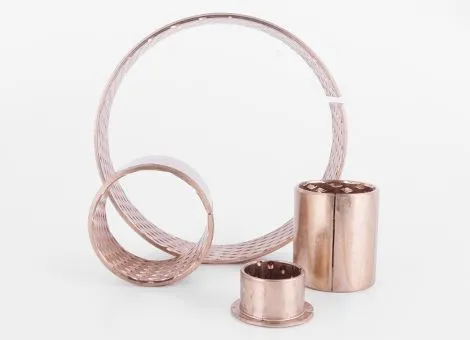
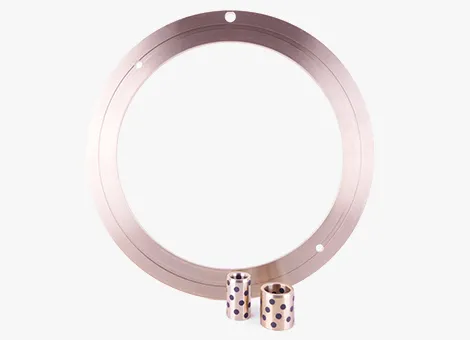
Turned solid plain bearings & brass bushes
Made of solid brass with turned oil grooves

Turned solid sliding bearings are mainly used at low speeds. These include, for example, applications in gearboxes, booms or gripper arms.

Overview

Profile Design Base material Density Hardness
HB
Elongation
Yield point
N/mm2
Tensile strength
N/mm2
LUMET-1U CuZn24Al6 / CuZn25AI6Fe3Mn4 8.0 >210 >12 >450 >750
LUMET-1U SH1 CuSn5Pb5Zn5 8.9 >70  >15 >90 >200
LUMET-1U SH2 CuAl10Ni5Fe5 7.8 >150  >10 >260 >600
LUMET-1U SH3 CuSn12 8.9 >95  >8 >150 >260
LUMET-1U SH4 CuSn10Pb10 8.9 >75  >8 >100 >210
LUMET-1U SH5 CuZn25Al6Fe3Mn4  8.0 >250 >8 >450 >800

Description Rotated solid sliding bushings

Rotated solid sliding bushings LUMET-1U

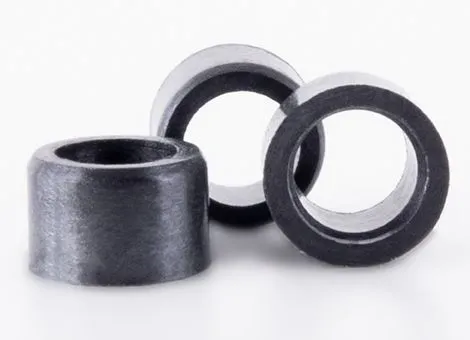
LUMET-1U machined solid plain bearings are made of solid brass with machined oil grooves. Due to their higher load capacity, good corrosion resistance, longer service life and higher basic hardness, machined solid plain bearings are mainly used at low speeds.

The LUMET-1U sliding bushings are currently used primarily in gearboxes, jibs or gripper arms.

Download technical informations

Product catalogue

Technical information


Your expert for turned solid slide bushings
Harald Nitzschke
E-Mail: nitzschke@ttv-gmbh.de
Your direct contact to us.
Do you have any questions? Do you need help? Then feel free to give us a call. Would you like a quote? Please send us the details via the form.
captcha

Frequently asked questions

What are the advantages of turned solid plain bearings?

High load capacity and extremely resilient.
Solid plain bearings are designed for extreme forces and can withstand high radial and axial loads without deforming. Particularly suitable for heavy-duty applications such as presses, construction machinery, or turbines.

Durable and resistant.
Long service life, as they are milled from a single piece (bronze, brass, or bimetal). They continue to function reliably even under continuous stress.

No relubrication.
Self-lubricating variants with graphite or MoS₂ do not require relubrication.

Resistant to shocks, impacts, and vibrations.
Unlike roller bearings, solid plain bearings are break-proof and resistant, even under sudden load peaks (particularly advantageous in mining, construction, and heavy industry).

Highly resistant to environmental influences.
Dirt, moisture, and extreme temperatures do not affect turned solid plain bearings. They function reliably, even in the most demanding environments such as offshore installations, steel mills, or power plants.

Smooth running and low friction.
Their specially machined sliding surfaces ensure quiet and stable operation without stick-slip effect.

What are the advantages of turned solid plain bearings?

Rolled plain bearings are lighter and more space-saving. They consist of a thin-walled, rolled metal strip with a low-friction sliding layer (e.g., PTFE or POM).
  • Lightweight and narrow with a wall thickness of 1 to 2.5 mm: take up little space, making them suitable for tight installation conditions or projects where the total weight must be kept low.
  • Respond more quickly to movements, making them particularly suitable for dynamic applications.
  • Not suitable for extreme loads: rolled dry plain bearings can quickly deform if the load is too high.
  • Heat dissipation is limited.

Turned solid plain bearings are robust and durable even under extreme loads. They are turned from a solid block of material (usually bronze or steel) and are therefore much more stable than their rolled counterparts.

Highly resilient, even under extreme loads and pressure conditions.

  • Very good thermal conductivity.
  • Resistant to deformation.
  • Long service life.
  • Heavy and solid, they require more space.

Which lubricants for turned solid plain bearings?

When it comes to the service life and performance of a turned solid plain bearing, the type of lubrication is also important.

There are basically two main categories: oil or grease lubrication for classic solid plain bearings, and solid lubricants for maintenance-free solutions.

Oil or grease lubrication for classic turned solid plain bearings

For continuous movement at medium to high sliding speeds.

  • Reduces friction
  • Protects against wear
  • Dissipates heat
  • Prevents corrosion

When is liquid lubrication problematic?

  • When the bearing is difficult to access.
  • In dusty or dirty environments.
  • At very high temperatures (above 200 °C).

In these cases, oil or grease lubrication of turned solid plain bearings makes sense:

  • Hydraulic systems (with continuous movement)
  • Guides in machine tools (for precise movements)
  • Automotive engineering (especially in joints and chassis components) 

Solid lubricant plain bearings.

These plain bearings are impregnated with materials such as graphite, molybdenum disulfide (MoS₂) or PTFE and have a self-lubricating surface.

  • Maintenance-free and suitable for extreme conditions  no relubrication necessary!
  • Withstands extremely high temperatures (up to over 300 °C)
  • Resistant to dust, dirt, and water
  • Very robust under high loads 

When are solid lubricants not ideal?

  • At very high sliding speeds (lubricating film does not regenerate as quickly as oil)
  • When additional heat dissipation is required (solid lubricants have no cooling effect)
  • For very fine, high-precision movements (solid lubricants do not always provide uniform friction)

Typical applications for solid lubricant plain bearings:

  • Mining equipment (in dirty and dusty conditions)
  • Offshore industry (solid lubricants are not washed out)
  • High-temperature equipment (e.g., in power plants, steel mills, or glass manufacturing)

What wave roughness for turned solid plain bearings?

The surface of the shaft on which the turned solid plain bearing runs directly influences the frictional resistance, abrasion, and service life of the bearing. In other words, a surface that is too rough can damage the sliding surface of the bearing, while a surface that is too smooth cannot retain the lubricating film.

Recommended shaft roughness for turned solid plain bearings:

Ra ≤ 0.4 µm

Surfaces that are too rough (>0.8 µm) lead to increased wear because the microscopic peaks of the shaft structure work their way into the bearing. Surfaces that are too smooth (<0.1 µm) can cause the bearing to “stick” and prevent a uniform lubricating film from forming (the so-called stick-slip effect).

What is the fit for turned solid plain bearings?

Turned solid plain bearings work best when they are neither too loose nor too tight. A basic distinction is made between a clearance fit (when the bearing should be able to move slightly) and an interference fit (when it must be securely fixed in place).

Standard fit of turned solid plain bearings for most applications:

Housing bore: H7 → The bearing sits securely in the housing without being too loose or too tight.

Shaft fit: f7 → The shaft can move in the bearing without excessive friction.

When is a loose fit required for the turned solid plain bearing?

A loose fit is useful if the bearing needs to have a certain degree of freedom of movement.

For applications such as:

  • Turbines or machine tools (high speeds)
  • Applications with significant temperature fluctuations.
  • Bearings that need to be easily adjusted over time.

When is a press fit of the turned solid plain bearing the better choice?

Some applications require the turned solid bearing to be bombproof. For example, when it is exposed to high forces or shock loads.

  • For very high loads (so that the bearing does not slip or loosen under load)
  • When large forces act on the turned solid plain bearing (e.g., in hydraulic systems or construction machinery)
  • In the case of strong vibrations and shock loads (so that the turned solid plain bearing does not loosen over time.

Press fits are used in:

  • Heavy-duty machines, cranes, and excavators.
  • High-pressure hydraulic systems.Lagerstellen mit ständig wechselnden Belastungen.

When are turned solid plain bearings better than roller bearings?

Both types of bearings have their strengths and weaknesses—neither is inherently better than the other. It depends on the requirements that the bearing location must meet.

In the case of high loads, harsh environments, or shock loads, turned solid plain bearings have clear advantages. Rolling bearings, on the other hand, are the better choice at high speeds where the aim is to minimize friction.

Solid plain bearings can withstand extreme forces without changing the bearing structure. They are the number one choice, especially in presses, turbines, construction machinery, and lifting equipment, because they can easily withstand high surface pressures.

  • Insensitive to shocks and vibrations.
    While roller bearings can be quickly damaged by sudden loads (e.g., cracks or even breaks in the rolling elements), solid plain bearings are very robust and resistant to impacts. This makes them particularly popular in heavy industry, mining, and hydraulic systems.
  • Low maintenance – or even maintenance-free.
    Many self-lubricating variants of turned solid plain bearings (e.g., with graphite or MoS₂) do not require additional lubrication.
  • Longer service life, even in harsh environments.
    Rolling bearings are sensitive to dirt, water, or dust because these can migrate into the bearings and cause damage. This is where turned solid plain bearings have the advantage: because they do not have open rolling elements, they cannot become contaminated.

Markets

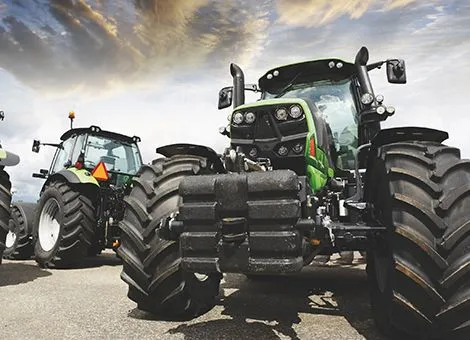
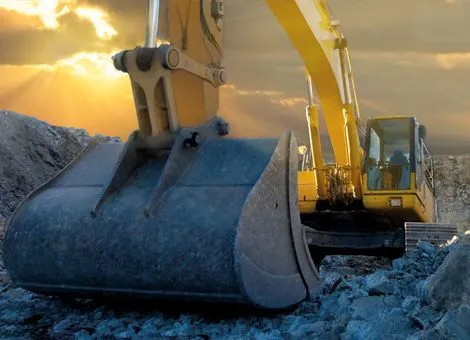
Whether agricultural machinery, construction machinery, forestry technology, drive technology, mechanical engineering, automotive or aerospace, we are ready for your challenges. With our engineering solutions, we manage to offer added value in all decisive product parameters through solutions developed specifically for customers and applications. Get to know our competence and best examples in the most diverse markets.